
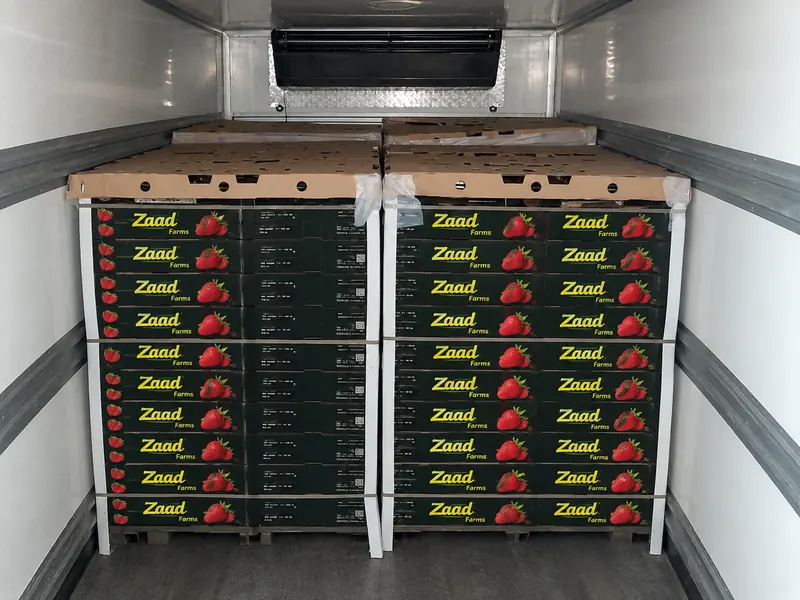
Quick answer: European retail and distribution chains run on standard pallets and modular cartons, most commonly the 1200 x 800 mm euro pallet with cartons built on a 600 x 400 mm footprint or its fractions. Matching these dimensions, keeping pallets stable and within agreed height, using treated wood where required and labelling each pallet clearly saves handling time and avoids rejections. Exact requirements vary by retailer and country, so confirm them with the buyer before packing. This guide is general information.
Why pallet and carton standards matter
Warehouses, trucks and store shelves are designed around standard unit sizes. A carton that does not fit the pallet, or a pallet that leans, causes damage, slows unloading and can be refused. Good palletisation also protects fruit from crushing and helps cold air move through the load. Our export packaging guide covers carton choices in more depth.
Common pallet and carton sizes
| Item | Typical dimension | Notes |
|---|---|---|
| Euro pallet | 1200 x 800 mm | Most common in European produce distribution |
| Industrial pallet | 1200 x 1000 mm | Used in some chains, often for heavier goods |
| Half pallet | 800 x 600 mm | Display pallets in some stores |
| Modular carton | 600 x 400 mm base | Fits euro pallet in common patterns |
| Half-size carton | 400 x 300 mm base | Fits modular layouts and display pallets |
Dimensions are nominal. Carton height depends on the product, and ventilation openings must line up when cartons are stacked.
Stacking pattern and height
Cartons are placed in an interlocking or column pattern, depending on strength and ventilation needs. Column stacking keeps vent holes aligned for airflow but needs strong cartons; interlocking is more stable but may reduce airflow. Pallet height is usually limited by the retailer and by container or truck dimensions, so agree a maximum height. Overhang beyond the pallet edge weakens cartons and should be avoided. Our cold-chain guide explains why airflow matters.
Stabilising the load
Use corner boards, strapping or stretch film so the load behaves as one unit, but avoid wrapping so tightly that it blocks ventilation. Place a slip sheet or top cap where specified. Check that pallets are clean, undamaged and the right grade. A loose or leaning pallet is one of the most common causes of damage in transit.
Wood treatment and pooling
Wooden pallets used in international trade normally need to meet wood-packaging rules such as heat treatment with the required mark, and rules can change, so ask your authority or forwarder what applies. Some chains use pallet pools where pallets are exchanged or rented, which brings extra administration. Agree early whether pallets will be exchanged, returned or treated as part of the goods. This guide is not legal advice.
Labelling pallets
Each pallet usually carries a label showing product, origin, packer, lot code and quantity, sometimes with a barcode the retailer uses for receiving. See our EU labelling guide for general label content and our supplier onboarding guide for what retailers expect.
Container and truck loading
The number of pallets per container depends on pallet size, loading pattern and the container type, and a 40-foot reefer typically carries somewhere in the low-to-mid twenties of euro pallets. Leave air channels as the cold-chain plan requires and do not block the return air. Ask your forwarder for a loading plan and confirm weight limits. For route choices see our air versus sea freight guide.
Common mistakes to avoid
Typical mistakes include cartons that overhang the pallet, blocked vent holes, over-tight wrapping, wrong pallet size for the retailer, untreated wood and missing pallet labels. Another is changing the pallet pattern without testing it for stability and airflow.
Palletising checklist
- Confirm pallet size, height limit and pattern with the buyer.
- Use modular cartons that fit the pallet without overhang.
- Keep ventilation holes aligned and airflow open.
- Stabilise with corner boards and strapping without blocking airflow.
- Check wood treatment and pallet condition.
- Label every pallet and keep a loading plan.
Putting this into practice
Review each season before planning the next one. Compare what you expected with what actually happened, list the three things that caused the most delay or cost of effort, and decide how to prevent them next time. Small improvements in specification wording, timing of confirmations and document preparation add up over a year and make future orders smoother for both sides.
Standard pallets and modular cartons make produce easier to handle and harder to damage. Agree the details with the buyer before you pack.
Palletising with Zaad Farms
We can discuss pallet and carton formats for lines such as grapes and lemons according to your buyer's specification. Please confirm pallet size, height and labelling requirements before the first order.
Before a large season order, consider a trial pallet and ask the receiver for feedback on stability, airflow and handling time. Small adjustments to pattern or strapping often prevent claims later.
Frequently asked questions
What is the standard pallet for fresh produce in Europe?
The 1200 x 800 mm euro pallet is the most common, with modular cartons built on a 600 x 400 mm footprint or its fractions. Confirm the retailer's requirement.
Why does carton size matter?
Cartons that fit the pallet without overhang stay stronger and stable, and aligned vent holes keep air moving. Poor fit causes damage and slower unloading.
How high can pallets be stacked?
It depends on the retailer, the transport and the carton strength. Agree a maximum height in advance.
Do wooden pallets need treatment?
International wood-packaging rules usually apply, such as heat treatment with the required mark. Check what applies with your authority or forwarder; this is not legal advice.
How many pallets fit in a reefer?
It depends on pallet size, pattern and container type; a 40-foot reefer typically carries somewhere in the low-to-mid twenties of euro pallets. Ask your forwarder for a loading plan.
Can Zaad Farms palletise to buyer specification?
We can discuss pallet and carton formats according to your buyer's specification. Confirm size, height and labelling requirements before the first order.