
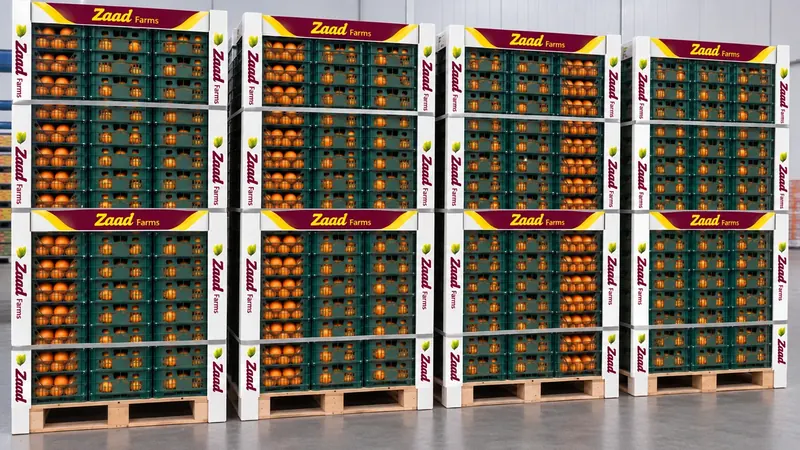
Export packaging is a system. The retail unit, the outer case and the pallet must work together to protect the product, keep air moving in the reefer and fit the buyer’s handling process. A strong-looking carton can still fail if its footprint does not match the pallet or if its vents are blocked when stacked.
1. Choose the format for the product and channel
| Format | Best for | Examples |
|---|---|---|
| Telescopic carton | Heavy, long-voyage produce | Oranges, lemons 15 kg |
| Open-top carton | Retail display, lighter fruit | Mandarins, pomegranates, mangoes |
| Punnets / clamshells | Soft fruit, retail units | Strawberries, grapes |
| Mesh / leno bags | Robust vegetables | Onions, potatoes, garlic |
| Retail bags | Consumer units in master cartons | Carrots 1 kg, citrus nets |
| Plastic crates | Wholesale, short chains | Oranges, lettuce |
| Foam box with ice | Highly perishable vegetables | Broccoli |
2. Ventilation and cooling
Reefer containers cool by pushing air through the load from the floor. Carton vents must line up when stacked so air can reach the product. Liners and bags reduce moisture loss but slow cooling, so they must be matched to the product. Always pre-cool before loading: a reefer is designed to hold temperature, not to pull heat out of warm fruit.
3. Protection inside the carton
- Tissue wraps for lemons and premium citrus
- Foam nets for mangoes and guavas
- Pads and dividers for soft or irregular products
- SO₂ pads for grapes, where specified
4. Labels and information
Every carton label should show at minimum the product and variety, class, size or count, net weight, country of origin, packer and lot code. Retailers add barcodes, their own brand and language requirements. Approve label placement so it remains visible on the pallet.
5. Pallets
Euro (80×120 cm) and industrial (100×120 cm) pallets are the most common. Agree the pallet pattern, number of layers, cartons per pallet, corner boards, strapping and pallet labels. Wood packaging must meet ISPM 15 where the destination requires it.
6. Private-label packaging
Printed packaging needs lead time. Agree artwork owner, proof approval, print quantities and what happens to leftover printed stock. Use a physical sample when the design changes materially.
Packaging checklist for your specification
- Carton type, dimensions and net weight
- Units per carton and cartons per pallet
- Internal protection (wraps, nets, pads, liners)
- Label content, language and barcode
- Pallet type, pattern and ISPM 15
Frequently asked questions
What is the most common carton for Egyptian oranges?
The 15 kg telescopic carton, packed by count. 10 kg open-top cartons and crates are also used.
Why do carton vents matter?
Reefers cool by moving air through the load. Aligned vents allow cold air to reach the fruit and remove heat.
What is ISPM 15?
An international standard for treating wood packaging such as pallets to prevent the spread of pests. Many countries require it.