
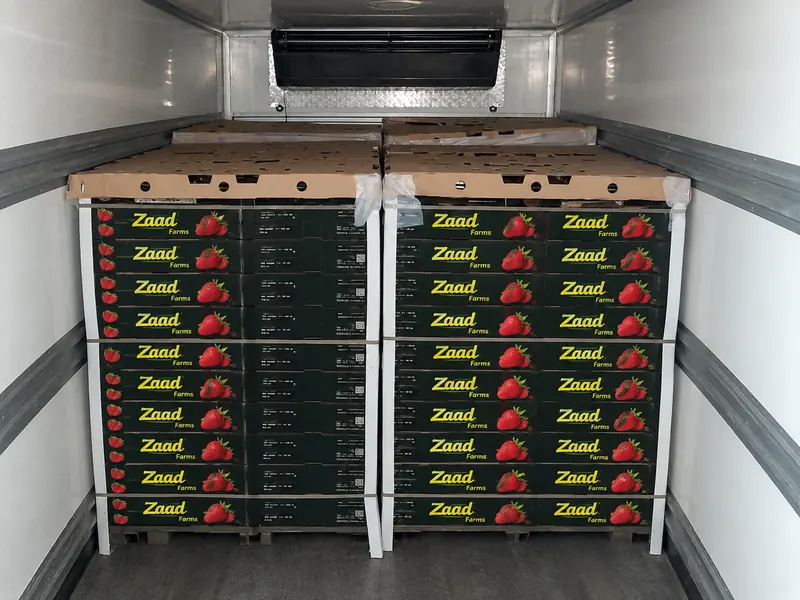
Quick answer: for fresh produce from Egypt, most experienced importers buy FOB (Free On Board) from Alexandria, Damietta or Port Said and arrange their own freight, because they control the shipping line, the reefer settings and the claim process. Buyers who prefer a single all-in price choose CFR or CIF. The right choice depends on your freight experience, your insurance and how much control you want over the cold chain.
Why the Incoterm matters more for fresh produce
Incoterms® 2020 are the standard trade terms published by the International Chamber of Commerce. They define three things: who pays for each part of the journey, where the risk passes from seller to buyer, and who clears the goods through export and import customs. For a dry commodity a mistake in these terms is expensive. For fruit and vegetables it can be far worse, because the goods are perishable: a reefer that loses power for two days can turn a full container into a total loss, and the contract decides who bears that loss.
The four terms used most often for Egyptian produce
| Term | Seller pays | Buyer pays | Risk passes |
|---|---|---|---|
| FCA (container yard / airport) | Export clearance, delivery to carrier | Main freight, insurance, import duties | When goods are handed to the carrier |
| FOB (port) | Packing, loading, export clearance up to the ship | Sea freight, insurance, import clearance | When goods are on board the vessel |
| CFR (destination port) | Everything in FOB plus main sea freight | Insurance, import clearance, local delivery | When goods are on board (not at destination) |
| CIF (destination port) | Everything in CFR plus minimum cargo insurance | Import clearance, local delivery | When goods are on board (not at destination) |
The point many first-time buyers miss is the last column. Under CFR and CIF the seller pays freight to your port, but the risk still passes at loading in Egypt. If the container is damaged at sea, you claim from the insurer or the carrier, not from the exporter, unless the contract says otherwise.
FOB: control for experienced buyers
With FOB you nominate the shipping line and the forwarder, you decide the transit route, and you are the party named on the bill of lading. This is useful when you already have a negotiated freight rate, when you consolidate several suppliers on one vessel, or when you want to book a specific service with a faster transit time. You also control the reefer set-point instructions, which matters for chilling-sensitive crops. A seller who ships FOB, such as Zaad Farms for oranges, still handles packing, palletising, pre-cooling, loading and Egyptian export clearance, so the price is clear and easy to compare between suppliers.
CFR and CIF: one price to your port
CFR and CIF are popular with smaller importers, with buyers entering a new origin and with traders who resell on arrival. You receive a quotation that already includes ocean freight, and the exporter books the vessel. The drawback is that freight rates change weekly, so a CFR quotation is normally valid for a short window only. CIF adds insurance, but the minimum cover required by the rules is limited, so many buyers ask for a higher level, such as all-risks cover including temperature deviation. Always read what the insurer excludes: spoilage caused by a ship delay is often excluded unless it is specifically included.
FCA and air freight
For air shipments of high-value, short-life items such as berries, FCA at the airport is common, as the airline takes custody at the cargo terminal. See our comparison of air and sea freight for produce before deciding.
What a good produce contract states beyond the Incoterm
- Named place: write the exact port, for example “FOB Alexandria Port, Egypt, Incoterms 2020”, not just “FOB Egypt”.
- Reefer set-point and ventilation: the temperature, humidity and vent setting that must appear on the container, matched to the crop. Our reefer temperature guide lists common values.
- Quality specification: size range, grade, tolerances and the inspection point, ideally loading, with an independent surveyor.
- Documents: commercial invoice, packing list, bill of lading, certificate of origin, phytosanitary certificate and any buyer-specific attestations. See export documents for Egyptian produce.
- Payment terms and claim window: how long you have to report a quality problem after arrival and what evidence is accepted.
How to choose: a simple decision guide
Choose FOB if you have a freight forwarder, import regularly and want to compare many suppliers on an equal basis. Choose CFR or CIF if this is your first container from Egypt, you want a landed price you can budget quickly, or your forwarder does not cover the Mediterranean and Red Sea routes well. If you are unsure, ask each supplier to quote both FOB and CIF to your port, then compare the freight element separately. A cheap FOB price with a high freight quote may be more expensive than a fair CIF price, and the reverse is also true.
Common mistakes to avoid
The first mistake is assuming that CIF means the exporter is responsible until the goods reach you. It does not. The second is accepting a vague insurance clause without checking what is covered. The third is leaving the quality inspection point undefined, which leaves both sides arguing about whether damage happened before or after loading. The fourth is ignoring demurrage and detention: free days at the destination port are limited, and a delay in import clearance can create daily charges that exceed the value of the savings you negotiated. The fifth is changing the destination port after the booking, which can invalidate the quoted freight.
Write the Incoterm, the named place, the reefer settings and the inspection point into the contract. Four lines can prevent most disputes.
Work with an exporter who quotes clearly
Zaad Farms quotes FOB and CIF on request for every product in our fresh vegetable and fruit range, and we share the packing specification, pallet plan and loading photographs with each shipment. To receive a comparison of FOB and CIF to your destination port, send us the product, volume and port through our contact page.
Frequently asked questions
What does FOB mean for fresh produce from Egypt?
FOB means the exporter delivers the packed produce on board the vessel at an Egyptian port such as Alexandria or Damietta and clears it for export. From that point the buyer pays for sea freight and carries the risk of transit.
Is CIF cheaper than FOB?
Not by itself. CIF is the FOB price plus freight and minimum insurance, so you should compare the freight element separately. Often a good FOB price combined with your own negotiated freight is the cheapest option for regular importers.
Who is responsible if the reefer container fails at sea?
Under FOB, CFR and CIF the risk passes to the buyer once the goods are on board. The buyer then claims against the insurer or the carrier, so check that your policy covers temperature deviation and delay.
Which Incoterm is best for a first container?
Many first-time buyers choose CFR or CIF to receive one landed-port price. Once you know your freight routes and costs, switching to FOB gives more control.
Which Incoterms version should I write in the contract?
Use Incoterms 2020, the current edition, and always name the exact port, for example ‘FOB Alexandria Port, Egypt, Incoterms 2020’.
Can Zaad Farms quote both FOB and CIF?
Yes. We quote FOB and CIF on request, so you can compare the product price and freight separately.