
Quick answer: blanching is a short heat treatment, usually in hot water or steam, followed by rapid cooling, applied to most vegetables before freezing. Its main job is to stop enzymes that would otherwise keep working in the freezer and cause off-flavours, fading colour and tough or mushy texture over months of storage. Too little blanching leaves enzymes active; too much cooks the vegetable and wastes texture. The right time and temperature depend on the vegetable and the cut size, so ask your supplier for their process parameters. This guide is general information, not a substitute for your own technical review.
What blanching actually does
Raw vegetables contain enzymes that stay partly active even at freezer temperatures. Over weeks and months they can produce grassy or bitter flavours, turn bright green to olive-brown and soften or toughen the tissue. A brief, controlled heat treatment inactivates these enzymes. Blanching also cleans the surface, drives out some air from the tissue, brightens the colour of many green vegetables and reduces the microbial load on the surface. It is not cooking: the aim is to treat the vegetable just enough for storage while leaving it firm enough to be cooked properly by the end user.
Under-blanching and over-blanching
Both mistakes are visible to a buyer, though sometimes only after months in storage. The table summarises common signs. Treat it as a guide to what to look for in samples and complaints, not as a diagnosis, since several causes can look alike.
| Problem | What you may notice | Typical cause |
|---|---|---|
| Under-blanched | Grassy or off flavour after storage, colour fading to olive or brown, slightly tough texture | Time too short, temperature too low or overloaded blancher |
| Over-blanched | Soft or mushy texture after cooking, dull colour, leached flavour and nutrients | Time too long, temperature too high or slow cooling afterwards |
| Poor cooling | Soft product, dull colour, higher microbial risk | Cooling water too warm or cooling time too short |
| Excess surface water | Clumping, frost and ice in the bag | Insufficient draining or drying before the freezer |
Which vegetables are blanched
Most vegetables destined for the freezer are blanched, including green beans, peas, broccoli, carrots, cauliflower, spinach and many mixed vegetable blends. Okra is typically handled with care because of its mucilage, and leafy products such as molokhia are prepared with their own steps. Some products are not blanched, for example onions and peppers are often frozen raw or lightly treated, and most fruit is frozen without blanching. Requirements vary by product, cut and end use, so confirm the process for each item. Our guide to Egyptian frozen okra and molokhia covers two typical examples from Egypt.
Time, temperature and size
Blanching conditions depend mainly on the vegetable, the cut and the equipment. Smaller or thinner pieces heat through faster, so a diced or sliced product needs a shorter treatment than whole pieces. The heating medium matters too: hot water and steam transfer heat differently and affect leaching and texture in different ways. Many processors verify the result by testing for a marker enzyme such as peroxidase, which indicates that the treatment reached the centre of the piece. Ask whether your supplier runs this check, how often, and what the acceptance criterion is. A well-run line keeps records of temperature, residence time and cooling temperature for each batch.
What happens after blanching
Blanching is only one step in a longer chain. After heating, the vegetable is cooled quickly, drained and dried at the surface, then frozen individually. Our explanation of how IQF freezing works describes the freezing stage, where small ice crystals and loose, separate pieces are the goal. Surface water left on the product is a common cause of clumping and frost, so drying before the freezer is part of quality, not an optional extra. Metal detection, final sorting and coded packaging follow, supported by a food safety system such as the ones described in our guide to HACCP and audited schemes.
Specification points to agree with the supplier
Because blanching quality shows up in colour, texture and flavour, build those into the specification instead of leaving them to opinion. Useful items include a description of the process in general terms, the target for enzyme inactivation or the method used to verify it, colour description or reference, texture after cooking by an agreed method, size or cut tolerance, defect limits for stems, skins and foreign matter, moisture or free-flowing requirement, shelf life under stated storage conditions and the testing method for each parameter. Agree how samples are cooked for assessment, because a sample boiled for too long will always look over-blanched. Pesticide residue and contaminant limits for your market apply to frozen vegetables just as they do to fresh, as explained in our guide to residue testing for Egyptian produce.
Storage and the cold chain
Even a perfectly blanched and frozen vegetable can lose quality if it warms up. Fluctuating temperatures cause ice crystals to grow, produce freezer burn and gradually dull colour. Keep frozen vegetables at a steady, very low temperature, record container temperatures where agreed and avoid long waits at ambient conditions during handling. For transport essentials see our cold chain and reefer guide. Ask for the supplier's recommended shelf life and the conditions it depends on, rather than assuming a single figure applies to every product.
A checklist for buyers of frozen vegetables
- Ask which vegetables in your range are blanched and which are not, and why.
- Request a general description of the process and how enzyme inactivation is verified.
- Agree a written specification covering colour, texture after cooking, defects and free-flowing quality.
- Define the cooking method used to assess samples so results are comparable.
- Check cooling and drying steps, since poor cooling and wet product cause common faults.
- Confirm batch coding and the records kept for each run.
- Test a sample after realistic storage, not only on the day it was produced.
Blanching is a balance. Enough heat to stop the enzymes, not so much that the vegetable is already half cooked before it reaches the kitchen.
Frozen vegetables with Zaad Farms
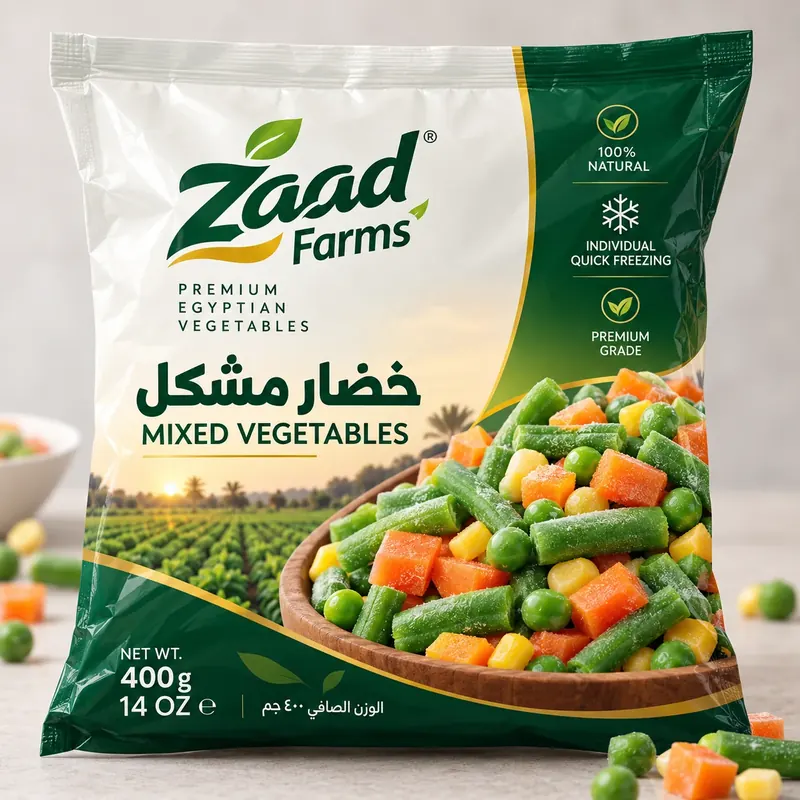
Our frozen vegetable range includes frozen mixed vegetables, frozen okra and frozen molokhia. Tell us the product, cut and destination market and we will discuss specifications and the documentation available. Always confirm technical details and food safety documents for your market before ordering. We do not claim certifications we cannot document.
Frequently asked questions
Why are vegetables blanched before freezing?
To inactivate enzymes that would otherwise continue to work during frozen storage and cause off-flavours, fading colour and texture changes. Blanching also cleans the surface and can brighten the colour of green vegetables.
Is blanching the same as cooking?
No. Blanching is a short, controlled heat treatment followed by rapid cooling. The vegetable should remain firm enough to be cooked properly by the end user.
What does under-blanching look like?
Grassy or off flavours after storage, colour fading to olive or brown and a slightly tough texture. These may only appear after weeks or months in the freezer.
What does over-blanching look like?
A soft or mushy texture after cooking, dull colour and loss of flavour. It is caused by too much heat or slow cooling afterwards.
Are all vegetables blanched?
Most are, but not all. Onions and peppers are often frozen raw or lightly treated, and most fruit is frozen without blanching. Ask your supplier for the process for each item.
Can Zaad Farms discuss frozen vegetable specifications for my market?
Yes. Tell us product, cut and destination and we will discuss specifications and available documentation. Confirm technical details and food safety documents before ordering.