
Quick answer: processors choosing potatoes for french fries mainly look at variety, dry matter, reducing sugars, tuber size and shape, defect levels and consistent supply. These factors decide fry colour, texture, yield and how much waste there is in the plant. Table-potato appearance matters less than internal quality, so a processor will normally set a specification and may test samples before accepting a lot. If you supply a processor, or buy frozen fries, understanding these criteria helps you ask the right questions. Specifications differ between processors and markets, so treat this as general information and confirm with your counterparty.
Why processing potatoes are judged differently
A potato sold for the table is judged mainly on look and cooking quality. A potato for fries is judged on how it behaves in the factory and in the fryer. High sugars can cause dark, uneven fries; low dry matter can lead to soft fries and lower yield; long, regular tubers cut into longer fries with less waste. That is why processors often work with specific varieties and growers and why a good table potato is not automatically a good processing potato. Our comparison of Spunta, Diamant and Lady Rosetta shows how varieties differ in use.
The main quality criteria
| Criterion | Why it matters | What buyers usually ask |
|---|---|---|
| Variety | Sets shape, dry matter and fry behaviour | Named variety suited to fries |
| Dry matter | Affects texture, oil uptake and yield | Target range and test method |
| Reducing sugars | Drive fry colour and browning | Maximum level, storage control |
| Size and shape | Determines fry length and cutting waste | Size range and minimum length |
| Defects | Rot, greening, damage and internal defects cause waste | Defect tolerances |
| Consistency | Plants run continuously | Steady supply and lot uniformity |
Storage and sugars
Storage temperature strongly influences sugar levels in potatoes. If potatoes are stored too cold, sugars can rise, which may darken fries when fried. Processors therefore care about how potatoes were stored, for how long and at what conditions. If you supply raw potatoes, expect to be asked about storage records and possibly to deliver for testing before the full lot is accepted. Exact storage targets depend on variety and the processor's requirements.
From raw potato to frozen fry
In simple terms, potatoes are washed, peeled, cut, blanched, dried, partly fried and then frozen in a controlled process. The result is a frozen product that customers finish in a fryer or oven. Quality checks happen at each stage, including colour, defects, length and moisture. For how frozen products fit into supply planning, see our guide on frozen mango, dates and french fries. Frozen products also depend on an unbroken cold chain, which our cold chain guide explains.
Supply planning and consistency
Processing plants prefer steady, predictable supply. Buyers of frozen fries should discuss lead times, pack sizes, labelling and any private label requirements early. Our private label programme guide explains how custom packaging and specifications are typically arranged. Annual or seasonal planning also helps secure raw-material quality, and the same discipline applies to fresh supply.
Documents and compliance
Raw potatoes moving across borders need phytosanitary paperwork, and processed products may need food-safety documents depending on the market. Requirements vary, so confirm with your own authority. Our MRL and phytosanitary documents guide covers the usual paperwork, and our guide to Egyptian potatoes for EU buyers shows how buyers there approach specifications.
What to inspect on arrival
For raw potatoes, check size, defects, greening, rot, sprouting and any samples that were agreed for testing. For frozen fries, check temperature records, packaging integrity, signs of thawing or ice build-up, and fry colour and length against the specification after cooking a sample. Keep photos and lot numbers for any claim.
Common mistakes to avoid
Typical mistakes include offering table potatoes to a processor without checking dry matter and sugars, ignoring storage history, setting no defect tolerances, and not planning delivery timing around the plant's schedule. Buyers of frozen fries sometimes forget to agree cut size, fry colour and packaging details in writing.
Checklist
- Agree variety and intended product (fries, wedges, other).
- Set dry matter, sugar, size and defect expectations.
- Ask about storage conditions and records.
- Plan delivery schedule and lot sizes.
- Agree packaging, labelling and any private label needs.
- Confirm documents and import rules.
- Inspect and test samples on arrival.
Putting this into practice
Start small and keep a written record. Begin with one product, one pack type and one shipment, then note what was agreed, what arrived and what you would change. Share that note with your supplier within a few days, while details are fresh, so that corrections are specific rather than general. Ask your logistics partner and your local adviser to confirm any rule that affects your market, because requirements and procedures change and differ between countries. This is general information, not legal advice.
Processors buy potatoes for what is inside, not only what is outside. Match the raw material to the finished product.
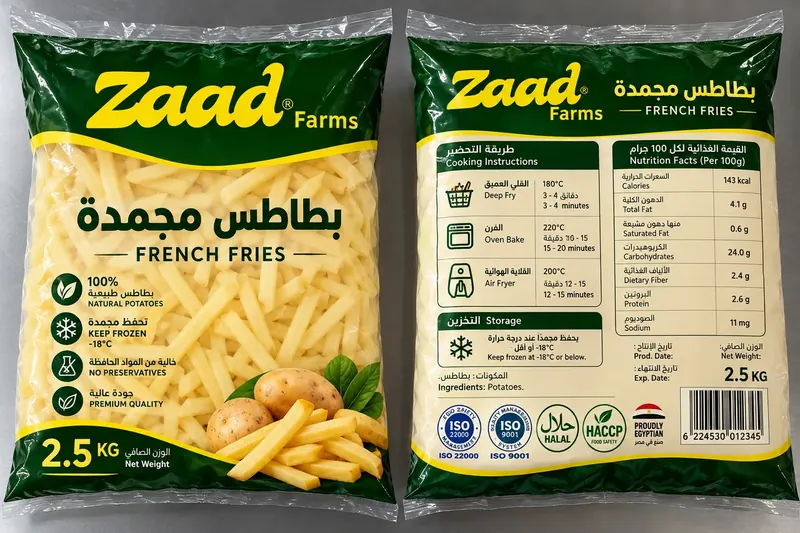
Potatoes and fries with Zaad Farms
We supply fresh potatoes and frozen french fries. Tell us your intended product, specifications and volumes and we will discuss realistic options. Confirm availability and import rules before ordering.
Frequently asked questions
What do processors look for in potatoes for fries?
Variety, dry matter, reducing sugars, tuber size and shape, defect levels and consistent supply, because these decide fry colour, texture, yield and waste.
Why does storage matter for fry potatoes?
Storage temperature influences sugar levels, which affect fry colour. Processors therefore ask about storage conditions, duration and records.
Is a good table potato also a good processing potato?
Not automatically. Processing needs suitable dry matter, sugars and shape, so processors usually specify varieties and test samples.
What should I agree when buying frozen fries?
Cut size, fry colour, pack size, labelling, lead times and any private label requirements, ideally in writing.
What should I check on arrival?
For raw potatoes: size, defects, greening, rot and sprouting. For frozen fries: temperature records, packaging, thawing signs and fry quality after cooking a sample.
Can Zaad Farms discuss processing supply?
Yes. Tell us your product, specification and volumes and we will discuss realistic options. Confirm availability and import rules before ordering.