
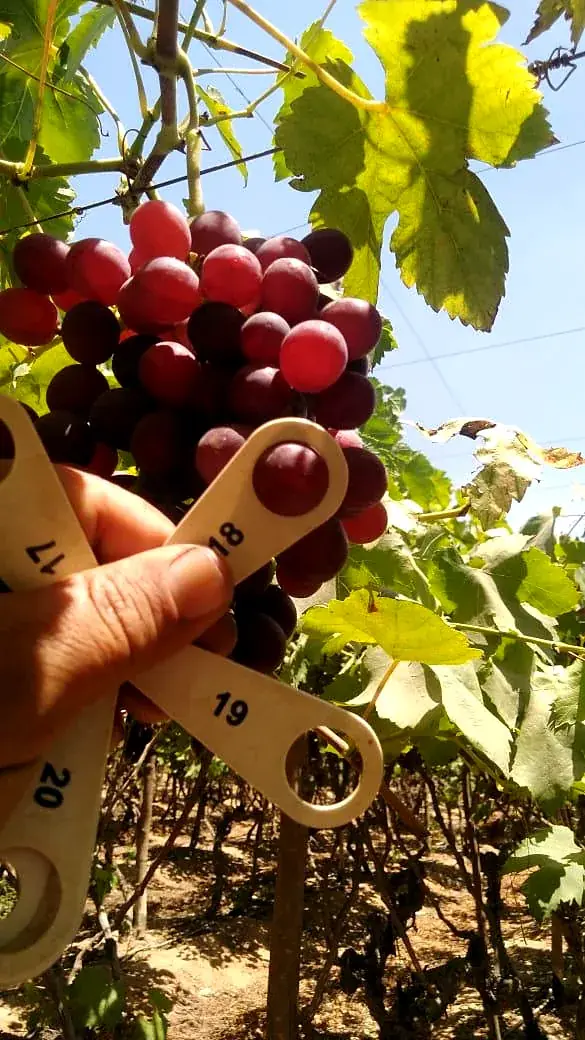
Quick answer: table grapes are protected in transit by two things working together: fast cooling to near freezing point and a pad that slowly releases sulphur dioxide (SO2) gas to suppress grey mould (Botrytis) and other decay. Grapes have no sweetening or ripening after picking, so the goal is to keep the stems green, the berries firm and the fruit free from rot until it reaches the shelf. The pads are placed in the carton or liner, and the dose must be right: too little allows decay, too much can bleach the berries and leave residues. Rules on sulphite residues and labelling differ by market, so confirm the current requirements before ordering. This guide is general information, not legal or technical advice for your specific shipment.
Why grapes need careful storage
Grapes are delicate. The berries are attached to the stem by a small brush, and when the berries fall off or the stem dries and browns, the bunch looks tired even if the fruit is sound. Grapes also lose water quickly and are prone to grey mould, which can spread from one berry to others in a closed carton. Because they do not ripen further after harvest, the aim of storage is simply to hold quality. For varieties and types see our guide to Egyptian table grape varieties.
The role of cold storage
Quick cooling after picking is the first protection. Fruit is brought into a cold store or pre-cooling tunnel soon after harvest and cooled to a temperature close to freezing, with high relative humidity to limit moisture loss. The exact temperature depends on the variety, so ask your supplier for the recommended range. Cooling before packing into the container matters because a reefer is designed to hold temperature, not to pull heat out of warm fruit. Our cold chain and reefer guide and post-harvest handling guide explain this in detail.
What sulphur pads do
A sulphur dioxide pad contains a chemical that gradually releases SO2 gas in the carton as it absorbs moisture. The gas inhibits the growth of Botrytis and other moulds on the berries and the stems. Many pads are designed with a quicker initial release followed by a slower, longer release to cover the journey. They are widely used in grape export, but they are a tool, not a substitute for good farming, hygiene and temperature control. Pads should be chosen to suit the carton size, the variety and the expected transit time. See our note on modified atmosphere packaging for related options.
| Factor | What matters | Why it matters |
|---|---|---|
| Cooling speed | Pre-cool soon after picking | Slows respiration and mould growth |
| Storage temperature | Near freezing, variety dependent | Holds firmness and stem condition |
| Humidity | High relative humidity | Reduces dehydration of berries and stems |
| SO2 pad type and dose | Match to carton and transit time | Too little allows decay; too much can bleach |
| Liner and carton | Suitable perforated liner | Lets gas distribute and moisture escape |
| Transit time | Shorter or longer journey | Determines pad selection and shelf-life expectations |
Risks: bleaching, taste and residues
SO2 can cause bleached patches on berries, especially near the pad or where damaged berries leak, and can leave a sharp smell or taste if overdosed. It can also leave residues on the fruit, which regulators control. Many markets set limits on sulphite residues, and some require labelling when sulphites exceed a threshold. Because rules differ between countries and change over time, always confirm the requirements for your market. For labelling context see our guide to food labelling requirements for fresh produce in the EU, and for testing see pesticide residue testing. This is general information and not legal advice.
Packing and handling points
Good grape packing uses clean bunches, minimal handling and a liner that suits the pad. Packing should avoid crushing and should leave bunches uninjured. Pallets need correct airflow in the container so that cooling is even. Our export packaging guide and the retail packing guide for strawberries and grapes cover carton and pack formats.
What importers should check on arrival
On arrival, check temperature records, then open sample cartons from several pallets. Look at stem colour, berry firmness, any shatter (berries dropping off), mould, bleaching near pads and smell. Take photographs and keep the records, since any claim will rely on them. Do not discard pads as part of unpacking without following your local rules for handling them.
Common mistakes
Frequent problems include packing warm fruit and relying on the container to cool it, mixing pad types without checking compatibility, using too many pads in small cartons, ignoring humidity, and skipping documentation of temperature. Another mistake is assuming the pad will compensate for poor field hygiene. A final one is not planning the sell-through: once SO2 protection ends, grapes can deteriorate quickly, so plan your distribution accordingly.
Checklist for grape importers
- Ask your supplier for the recommended storage temperature and humidity.
- Confirm pad type, dose and carton or liner design.
- Check the residue and labelling rules for your market.
- Require temperature records and loading photographs.
- Inspect stems, berries, shatter and bleaching on arrival.
- Plan distribution so fruit is sold soon after arrival.
- Keep documentation of any quality concerns.
Cooling protects the fruit and the pad protects the carton. Neither works well without the other, and neither replaces good farm hygiene.
Grapes with Zaad Farms
We supply Egyptian table grapes. Tell us your market and transit time and we will discuss packing and handling options. Always confirm current availability, specifications and import rules before ordering.
Frequently asked questions
What is a sulphur pad in grape packaging?
A pad that slowly releases sulphur dioxide gas inside the carton to suppress grey mould and other decay during storage and transport. The type and dose must suit the carton, variety and transit time.
Can sulphur pads damage grapes?
Yes, if the dose is too high or damaged berries leak, they can bleach the berries and leave a sharp taste or smell. Correct selection and packing reduce this risk.
Do sulphur pads leave residues?
They can leave sulphite residues on the fruit. Many markets set limits and some require labelling above a threshold, so confirm the current rules for your market.
Why is pre-cooling important for grapes?
A reefer container is designed to hold temperature, not to cool warm fruit. Cooling soon after picking slows decay and protects the stems and berries.
What should I check when grapes arrive?
Temperature records, stem colour, berry firmness, shatter, mould, bleaching near pads and smell. Take photographs and keep records for any claim.
Can Zaad Farms discuss grape packing options?
Yes. Share your market and transit time and we will discuss realistic packing and handling options. Confirm availability and import rules before ordering.