
Quick answer: a reliable Egyptian produce supplier can prove who they are (company and export registration), show where the fruit is grown and packed (farm and packing house), hold food-safety certificates that match the products you want, send consistent samples, and give references from buyers in your region. If a supplier cannot do all five, treat the offer as high risk, however attractive the price.
Why supplier checks matter
Egypt is a major producer of citrus, potatoes, onions, grapes, strawberries and many other crops, and its export sector ranges from large integrated growers to small trading offices. That variety is an advantage for buyers, but it also means quality, documentation and reliability differ widely. A trader without farms may buy from several packing houses and cannot guarantee consistency. A grower with its own packing house controls the whole chain from field to container. Neither model is automatically wrong, but you should know which one you are dealing with before you commit money.
The 10-point checklist
| Check | What good looks like | Red flag |
|---|---|---|
| 1. Legal identity | Commercial register, tax card and export registration that match the company name on the invoice | Different names on offer, invoice and bank account |
| 2. Farms and packing house | Willing to share addresses, photographs and a live video or visit | Refuses any visit; only stock photos |
| 3. Certificates | Valid food-safety and farm certificates with scope covering your product | Expired or scanned-over certificates |
| 4. Product knowledge | Explains varieties, season, size grades and packing without hesitation | Promises every product all year round |
| 5. Samples | Sends samples from the same lot and packing line as the shipment | Perfect sample, different bulk quality |
| 6. References | Gives buyers you can contact, ideally in your region | Only anonymous testimonials |
| 7. Documents | Explains phytosanitary, origin and residue documents clearly | Says documents are “not needed” |
| 8. Capacity | States realistic weekly volumes and reefer loading plan | Accepts any volume instantly |
| 9. Payment terms | Clear, balanced terms with a bank account in the company’s name | Full prepayment to a personal account |
| 10. Communication | Quick, specific answers; written specification | Vague replies, pressure to pay fast |
Verify the company and the farm
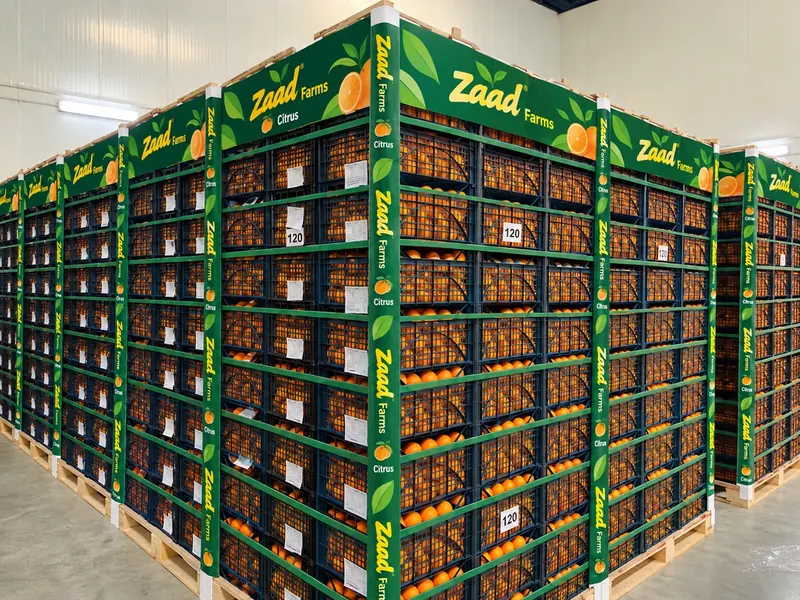
Ask for the commercial register, tax card and export registration, then check that the legal name appears consistently on the quotation, proforma invoice and bank details. Request the farm location and the packing-house location, and ask for dated photographs or a short live video call showing the loading area. A grower-exporter such as Zaad Farms can show the actual fields and packing lines behind products like our oranges and potatoes. If a supplier is a trader, ask which farms the product comes from and whether those farms hold current certificates.
Certificates and documents
Food-safety schemes commonly requested by European and Gulf buyers include GLOBALGAP for farms and HACCP-based systems or BRCGS/ISO 22000-type certification for packing houses. Read the scope line of each certificate: it must cover the product and the site you are buying from. Also ask how the supplier handles the shipment papers described in our guide to phytosanitary and residue documents. A professional exporter will explain this part without being asked twice.
Samples that mean something
A sample is only useful if it represents the shipment. Ask which lot it came from, which packing line was used and what size grade and packaging it shows. Compare it with the written specification, for example calibre range, colour, brix where relevant and defects tolerance. For perishable fruit, consider a small trial shipment before a full container, and agree in advance how it will be inspected. Our guide to export packaging explains what to expect on cartons and pallets.
Capacity and honest answers
Ask for realistic weekly volumes by product and season. A supplier who says yes to every volume and every month is usually a trader sourcing opportunistically. Our seasonal calendar shows when each crop is genuinely available; a serious supplier will stay inside those windows or explain exactly how they extend them, for instance with cold storage.
Payment, contracts and communication
Insist that the bank account is in the company’s name and that terms are written in the contract: Incoterm, price, specification, documents, inspection point and claim window. Our guide to FOB, CFR and CIF shows how to write these clearly. Be cautious about large prepayments to a supplier you have not yet traded with; balanced terms, such as a deposit and a balance against copies of shipping documents, are normal. Finally, judge communication: a good exporter answers specific questions with specific answers, and puts specifications in writing.
A reliable supplier makes verification easy. If they resist your checks, that is the information you needed.
Next step
If you would like to run this checklist on Zaad Farms, send us your product list and destination, and we will share company documents, farm and packing-house photographs, specifications and sample arrangements through our contact page.
Frequently asked questions
How do I know if an Egyptian exporter is genuine?
Check that the commercial register, tax card and export registration match the name on the invoice and bank account, and ask for dated farm and packing-house photographs or a live video visit.
Should I buy from a grower or a trader?
Both can work. A grower-exporter controls quality and traceability from field to container; a trader offers wider range but you must check which farms the product comes from.
Which certificates should I ask for?
Typically GLOBALGAP for farms and a recognised food-safety certificate for the packing house, plus phytosanitary and origin documents per shipment. Always check the scope covers your product.
Is it safe to pay a deposit before the first shipment?
A moderate deposit with the balance against shipping-document copies is common, but only after you have verified the company, sent written terms and paid to an account in the company’s name.
Should I order a trial container first?
For perishable crops a small trial or a sample from the real packing line is wise. Agree the specification and inspection method in advance.
Can Zaad Farms share farm and packing-house details?
Yes. We share company documents, photographs, specifications and sample arrangements on request.