
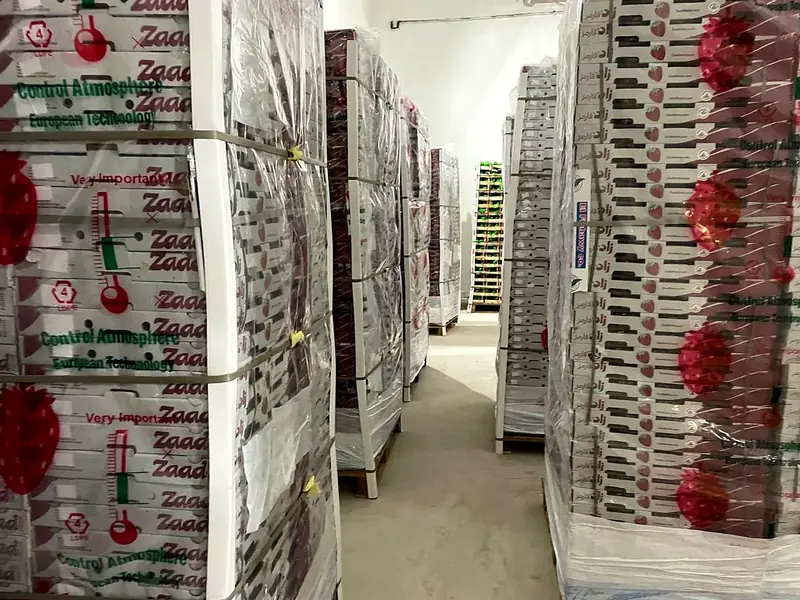
Quick answer: most fresh produce from Egypt travels in a 40 ft high-cube reefer, which usually takes about 20 pallets of 1.2 × 1.0 m or around 23 pallets of 1.2 × 0.8 m, depending on the container. A 20 ft reefer takes roughly half as many and suits smaller orders. In both cases the load must leave airflow paths open, stay below the red load line, respect the weight limit of the route, and be pre-cooled to the set-point before it goes in.
Why loading matters as much as temperature
A reefer unit does not cool fruit like a cold room does. It circulates cold air, usually from the floor upward through the cargo, and carries heat away. If cartons block the air or leave gaps, parts of the load are poorly cooled, and fruit near the doors or the top may warm up even though the set-point on the display looks perfect. Good loading is therefore as important as the temperature you choose, and it is the first thing a surveyor or an insurer will look at after a problem.
20 ft and 40 ft: what fits
| Container | Typical pallet capacity | Typical net cargo weight | Best used for |
|---|---|---|---|
| 20 ft reefer | Around 10 pallets of 1.2 × 1.0 m, or about 10–11 of 1.2 × 0.8 m | Roughly 18–21 tonnes, depending on the container | Trial orders, high-value berries, mixed small programmes |
| 40 ft reefer | Around 20 pallets of 1.2 × 1.0 m | Roughly 24–28 tonnes, depending on the container | Full programmes of citrus, grapes, potatoes and onions |
| 40 ft high-cube reefer | Around 20–23 pallets, depending on pallet size | Roughly 26–29 tonnes, depending on the container | Light, bulky products such as lettuce or peppers |
These figures are indicative. The exact capacity depends on the container model, the pallet size and the carton dimensions, so always confirm with your forwarder or shipping line. A heavy crop such as potatoes or onions is usually limited by weight, while a light crop such as strawberries or lettuce is limited by volume. Our guides to potatoes for EU buyers and fresh strawberry specifications show how pack weight affects the pallet plan.
The rules of a good reefer load
- Pre-cool the container to the set-point before loading, and load quickly, in a cold area, so fruit does not warm up at the dock.
- Load only pre-cooled fruit. The unit holds the temperature of the cargo; it cannot cool warm pallets quickly.
- Stay below the red load line marked on the container walls. Cartons above it block the air return and cause warm spots.
- Keep cartons in the pallet footprint. Overhanging cartons crush each other and block ventilation holes.
- Use the T-floor properly. Air flows through the grooves in the floor, so pallets must be bottom-ventilated and gaps near the doors must be closed correctly.
- Close the door gap with spacers or airbags so pallets do not move, but never block the rear air path.
- Set vents and humidity as agreed in the contract, and photograph the display before the container is sealed.
Mixed loads: what can share a container
Many importers prefer one product per container, but mixed loads can work when the products share a temperature range and do not damage each other. The two classic problems are ethylene and odours. Some fruits give off ethylene, which speeds ripening and yellowing in sensitive products, and strong-smelling products can taint neighbours. As a guide, you can combine products with a similar set-point and low sensitivity, but you should never combine, for example, ethylene-sensitive leafy vegetables with apples, or garlic and onions with delicate fruit. Our reefer temperature guide lists typical set-points by crop; confirm each combination with your forwarder before booking.
Weight limits and road transport
A full container must also be legal on the road at both ends. Many countries limit the total weight of a loaded truck and container, and the permitted payload may be lower than the container’s rated capacity. A heavy product such as potatoes or onions can easily exceed the local limit if the container is loaded to the maximum. Ask your forwarder for the road weight limit at destination, then agree with your supplier the number of cartons per pallet and pallets per container. Overweight containers can be refused at the port or require expensive repacking.
Documents and records at loading
Ask for a loading list, photographs of the open and loaded container, the container and seal numbers, the set-point shown on the display, and, where available, a temperature data logger placed in the cargo. These records are your evidence if there is a dispute about temperature, and they complement the inspection report described in our guide to pre-shipment inspection. The right Incoterm also decides who holds the risk after loading, as explained in our article on FOB, CFR and CIF.
Common loading mistakes
The most frequent mistakes are loading warm pallets, loading above the red line, blocking the rear air return with a loose pallet, using solid cartons without ventilation holes, and mixing incompatible products. A second group of mistakes comes from planning: selecting a pallet size that does not fit the container well, forgetting the road weight limit, or booking a 40 ft reefer for an order that only fills half of it, which wastes freight. A third group is about records: if no one photographs the load, you cannot show how it left the packing house.
Pre-cool, load below the red line, keep the air moving, and record everything. Those four habits protect most reefer cargoes.
Planning a container with Zaad Farms
We prepare a pallet plan for each product and container size and share loading photographs with every shipment. For citrus programmes see our oranges and mandarins; for roots and bulbs see our potatoes and onions. Send us your product, volume and destination port, and we will propose the container type and pallet configuration.
Frequently asked questions
How many pallets fit in a 40 ft reefer?
Usually about 20 pallets of 1.2 × 1.0 m or around 23 pallets of 1.2 × 0.8 m, depending on the container model. Always confirm with your forwarder.
What is the red load line in a reefer?
A marking on the container walls showing the maximum height of the cargo. Loading above it blocks the return air and creates warm spots in the load.
Can I mix different fruits and vegetables in one container?
Sometimes, if they share a set-point and do not harm each other. Avoid combining ethylene producers with sensitive products, and strong-smelling products with delicate fruit.
Why must fruit be pre-cooled before loading?
A reefer unit maintains the cargo temperature and cannot quickly cool warm pallets. Warm fruit spends the first days of transit in poor condition.
Is a 20 ft reefer suitable for a first order?
Yes. A 20 ft reefer suits trial orders, high-value berries and small programmes, though the cost per tonne is usually higher than a 40 ft.
Does Zaad Farms provide loading photographs?
Yes. We share photographs of the loaded container, the seal number and the temperature display with each shipment.