
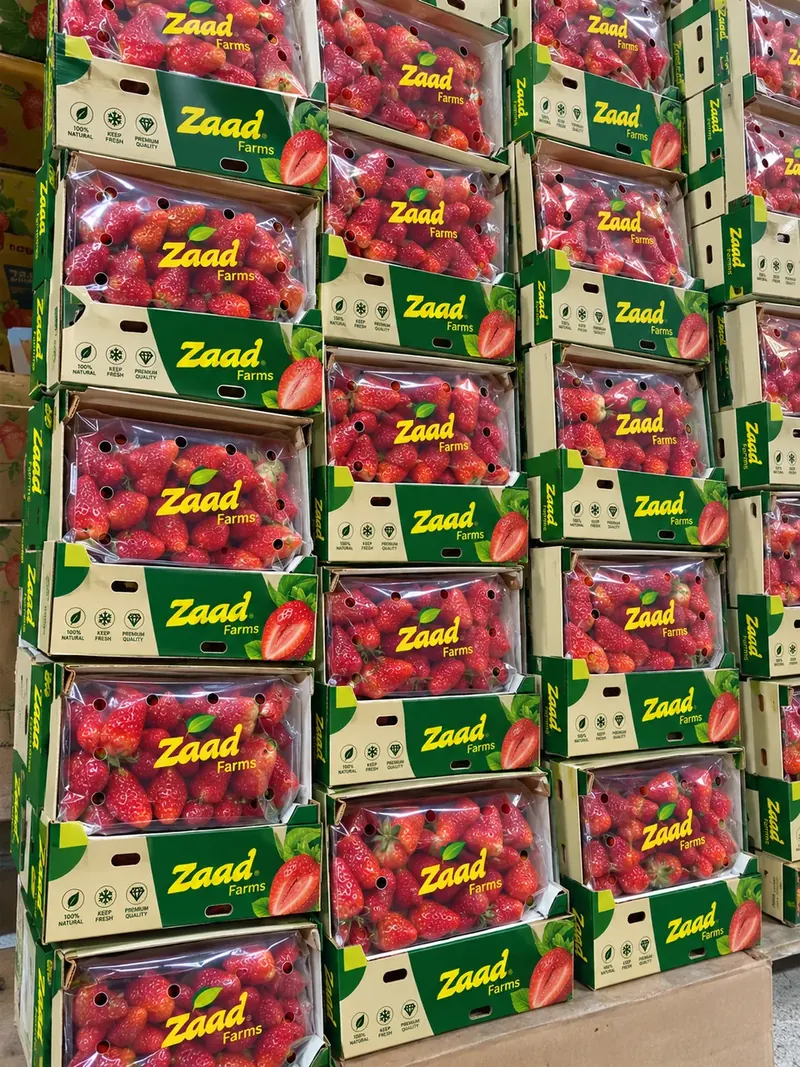
Quick answer: export strawberries are normally packed in vented plastic clamshells or punnets, grouped into flats or cartons and stacked on pallets, then cooled quickly and kept cold all the way to the store. The format you choose affects protection, shelf appeal, cost, airflow and how well the fruit travels. Strawberries are one of the most perishable fruits: they bruise easily, lose condition fast and have no way of ripening after picking, so packing must protect them and let cold air reach every pack. Typical retail pack sizes differ by market, and many buyers use a recognised size such as 250 g or 500 g, but you should always agree the exact weight, count per carton and labelling in writing. This guide is general information; confirm details with your supplier and local rules.
Why packing matters so much for strawberries
Strawberries are soft, juicy and easily damaged by pressure or rubbing. They also respire quickly, so heat builds up if cooling is slow. Poor packing can cause crushing, moisture build-up, mould and fast decline on the shelf. Good packing does three things: it protects the fruit physically, it lets cold air pass through the pack and the pallet, and it presents the fruit well to shoppers. For the basics of keeping the cold chain unbroken, see our cold chain and reefer guide.
The main packing formats
| Format | What it is | Typical use | Main points |
|---|---|---|---|
| Clamshell | Hinged, vented plastic container with a lid | Retail packs for supermarkets | Good protection and display; needs ventilation holes |
| Punnet | Open or lidded tray or basket, sometimes with film | Retail packs, often with flow-wrap or lid | Lighter; check airflow and stacking strength |
| Flat or carton | Outer carton holding several packs | Shipping unit for multiple clamshells | Must be vented and strong enough to stack |
| Bulk tray | Larger tray without retail packs | Foodservice or processing | Fewer retail features; check layering |
| Frozen bulk | Lined cartons or bags for IQF fruit | Industry and foodservice | Different system; see frozen strawberry guide |
Weights, counts and sizing
Retail packs are usually sold by weight, and the commonly used sizes differ by country. What matters is that you state the net weight, the number of packs per flat and the number of flats per pallet, and that the fruit size and grading inside the pack are consistent. Our guide to strawberry varieties and specifications explains how size and quality grades are described, and our retail versus wholesale packing guide covers how packing differs between customer types.
Ventilation and airflow
Ventilation is a key design point. Clamshells and cartons need holes positioned so that cold air can pass through the pallet from the cooling system. If vents are blocked by labels, film or the way cartons are stacked, the fruit in the centre may stay warm. The same goes for pallet wrapping: some covering is needed to protect the load, but it must not block the airflow that the reefer depends on. Ask your supplier to confirm the pallet pattern and the venting plan.
Labelling and traceability
Each pack and carton normally carries the product name, origin, net weight, packer or exporter identification, and a lot code, along with any details required by the destination market. Retailers often have their own label requirements. Lot codes allow you to trace a problem back to a harvest date and field. See our guide on traceability and lot coding. Labelling rules vary by market, so confirm them before printing.
Cooling, transport and timing
Strawberries must be cooled quickly after picking and kept cold throughout. Because shelf life is short, speed matters: many shipments go by air, and sea shipments need very good cold chain control and a short route. Our air versus sea freight guide helps decide, and our modified atmosphere packaging guide explains an option some suppliers use to extend shelf life. Always check what is realistic for your route and variety.
What to inspect on arrival
On arrival, check temperature records, then open sample flats from different pallets. Look for crushed or leaking fruit, mould, wet cartons, calyx condition (green and fresh), colour, firmness and any off smell. Record the fruit temperature, take photographs and keep the lot codes. Report any problem quickly, because strawberry claims depend on prompt evidence.
Common mistakes to avoid
Typical mistakes include overfilling clamshells so lids crush the fruit, using packs with too few vents, wrapping pallets in a way that blocks airflow, mixing sizes in one pack, and leaving pallets on a warm dock during transfers. Another mistake is not agreeing the exact label and weight beforehand, which can cause rejection at the retailer. Finally, do not forget the frozen alternative for processing needs: see our guide to IQF frozen strawberry grades.
Packing specification checklist
- Agree the pack type, net weight and number of packs per carton.
- Specify fruit size, colour, grade and calyx condition.
- Confirm ventilation design and pallet pattern.
- Agree labelling, lot codes and any retailer requirements.
- Set the cooling and temperature requirements.
- Decide the transport mode and timing.
- Require temperature records and photographs at loading.
A strawberry pack has to do three jobs at once: protect, ventilate and sell. Specify all three before you order.
Strawberries with Zaad Farms
We supply fresh strawberries and frozen strawberries. Tell us your market, pack format and timing and we will discuss realistic options. Always confirm current availability, specifications and import rules before ordering.
Frequently asked questions
What is the difference between a clamshell and a punnet?
A clamshell is a hinged, vented plastic container with a lid, while a punnet is usually an open or lidded tray or basket, sometimes with film. Both are used for retail packs.
Why does ventilation matter in strawberry packs?
Strawberries respire quickly and heat builds up if cold air cannot pass through the packs and pallet. Vents positioned correctly help cool the fruit evenly.
What pack weights are used for export strawberries?
Common retail sizes differ by market. Agree the exact net weight, packs per carton and cartons per pallet with your supplier in writing.
Should strawberries go by air or sea?
Shelf life is short, so air is common, and sea works only with excellent cold chain control and a short route. Compare options for your market and variety.
What should I check on arrival?
Temperature records, crushed or leaking fruit, mould, wet cartons, calyx freshness, colour, firmness and smell. Take photographs and keep lot codes for any claim.
Can Zaad Farms discuss strawberry packing?
Yes. Share your market, pack format and timing and we will discuss realistic options. Confirm availability and import rules before ordering.