
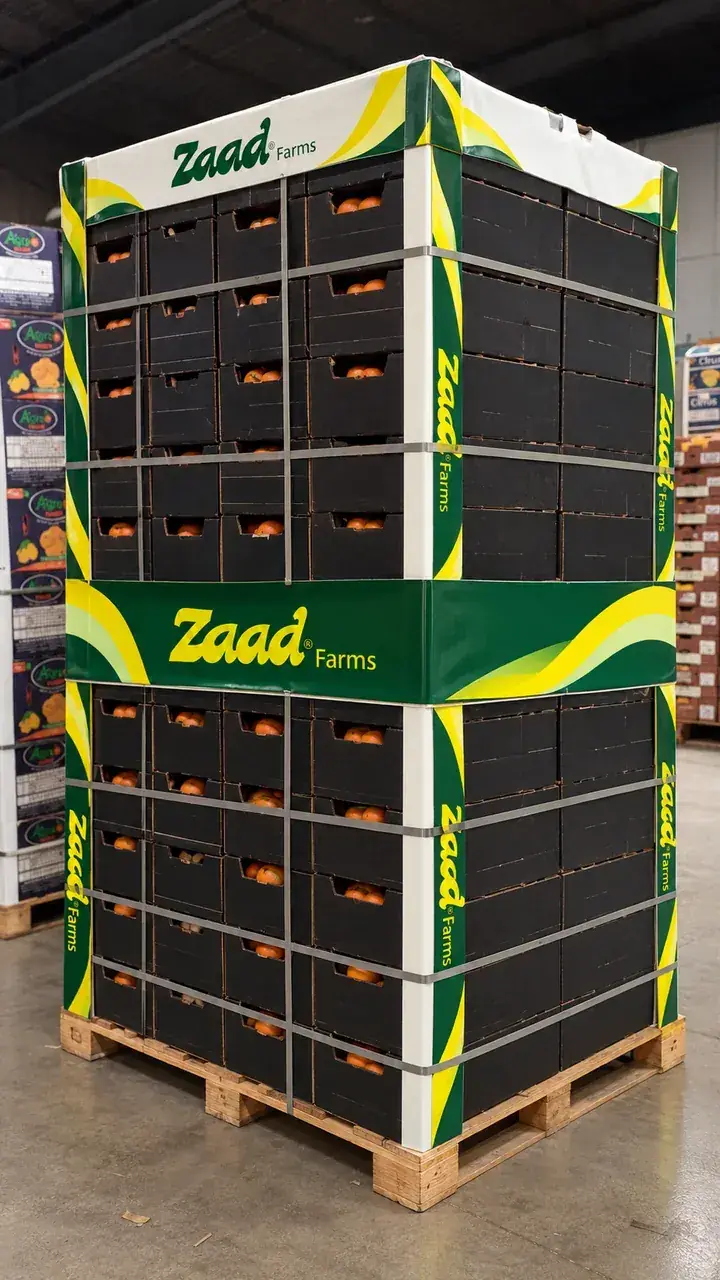
Quick answer: traceability means being able to identify where produce came from and where it went, using lot codes that link each carton or pallet to a farm, a harvest date, a packing run and a shipment. A good system lets a supplier trace a labelled carton back to its source quickly and accurately, and lets the buyer trace forward to customers if a problem arises. Legal requirements differ by market and change over time; this guide is general information, so check the rules that apply to you.
Why traceability matters
If a quality complaint, a residue result or a food-safety concern appears, the first questions are always the same: which farm, which block, which day, which packing line and which other pallets are affected. Without a code, the answer is a guess and the response is broad and costly. With a clear code, the response can be narrow, fast and credible. Traceability does not prevent problems, but it limits how far a problem spreads and shows buyers and authorities that the system is under control.
One step back, one step forward
A common principle is that every business in the chain should know who supplied it (one step back) and to whom it supplied goods (one step forward). The grower records the farm and block, the packhouse records the lots it received and what it packed, the exporter records the shipment, and the importer records the customers. When each link keeps its records and passes the code on, the chain can be followed in either direction. A broken link, such as a repacked carton with a new label and no record of the old code, breaks the trail.
What a lot code can contain
There is no single universal format, but a useful code ties together several facts. It may be printed as text, a barcode or a QR code on cartons and pallet labels, and the underlying records must be able to answer the following questions.
| Element | What it identifies | Why it matters |
|---|---|---|
| Farm and block | The grower and field the produce came from | Links to spray and water records |
| Harvest date | When it was picked | Checks pre-harvest intervals and age |
| Packhouse and line | Where and when it was packed | Narrows a recall to a packing run |
| Product and size | Variety, grade and size | Matches the order and specification |
| Pallet or carton ID | The physical unit shipped | Connects to container and invoice |
| Shipment reference | Container, vessel and consignee | Allows tracing forward |
Records behind the code
A code is only as good as the records behind it. Ask whether the supplier keeps harvest records, intake logs at the packhouse, packing records, cold-store movements, dispatch records and, at the farm, spray and fertiliser logs and water tests. These should be linked by the code and kept for a defined retention period. Where growers are certified under schemes such as GLOBALG.A.P., traceability is usually a requirement; see our guide to farm food safety and the overview of HACCP, BRC and ISO 22000.
Mixed lots, repacking and consolidation
Traceability gets harder when lots are mixed. A pallet that combines produce from several farms, or a container consolidated from several packhouses, needs a rule for how codes are recorded so that each carton can still be traced. Repacking, such as moving fruit from bulk crates into retail packs, must carry the source lot forward. If a supplier cannot explain how mixed or repacked lots are coded, treat that as a weak point and ask for a documented procedure.
How to test a supplier's traceability
The best check is a trace test. Take a carton label from a recent shipment and ask the supplier to show, within a fixed time such as a few hours, the farm, block, harvest date, packing record, spray records and dispatch documents for that code. Then ask them to identify all other pallets packed from the same lot and where they went. A system that answers quickly and consistently is working. One that needs days, or gives vague answers, needs improvement. You can run a simple version of this test at the time of a sample or first shipment, as in our guide to sample orders.
Traceability and claims
Good codes make quality claims easier to resolve. When fruit arrives with a defect, a photo of the carton label and the code let you check whether the problem is limited to one lot or shows a wider pattern; see our notes on receiving produce and quality claims. The same codes support residue testing, because a result can be tied to a specific farm and spray programme.
A checklist for importers
- Check that every carton and pallet has a legible code or label.
- Confirm the code links to farm, block, harvest and packing records.
- Ask how mixed pallets and repacked goods are coded.
- Run a trace test on a recent shipment and time the response.
- Keep your own records of lots received and customers supplied.
- Photograph labels on arrival and keep them with the claim file.
- Agree a retention period for records with the supplier.
Traceability is not paperwork for its own sake. It is the difference between recalling one pallet and doubting a whole season.
Traceability with Zaad Farms
If you buy potatoes, onions, oranges or grapes, tell us what labelling and records your customers expect and we can discuss how lots are identified for your orders. Requirements differ by market, so confirm the rules that apply to you with your authority or adviser. Our guide to private label programmes also covers how labels and codes fit into retail packs.
Frequently asked questions
What is a lot code?
A code on a carton or pallet that links it to a farm, harvest date, packing run and shipment, so produce can be traced back and forward.
What does one step back, one step forward mean?
Each business records who supplied it and to whom it supplied goods, so the chain can be followed in both directions.
What should a produce lot code include?
It should link to the farm and block, harvest date, packhouse and line, product and size, pallet or carton ID and shipment reference.
How can I test a supplier's traceability?
Pick a carton label from a recent shipment and ask the supplier to show the farm, harvest, packing, spray and dispatch records and all other pallets from the same lot within a fixed time.
Does traceability prevent food-safety problems?
No, but it limits how far a problem spreads and speeds up the response, which protects buyers and customers.
Can Zaad Farms discuss lot coding for my orders?
Yes. Tell us your market and the labelling your customers expect and we will discuss how lots are identified. Legal rules differ by market, so check those that apply to you.