
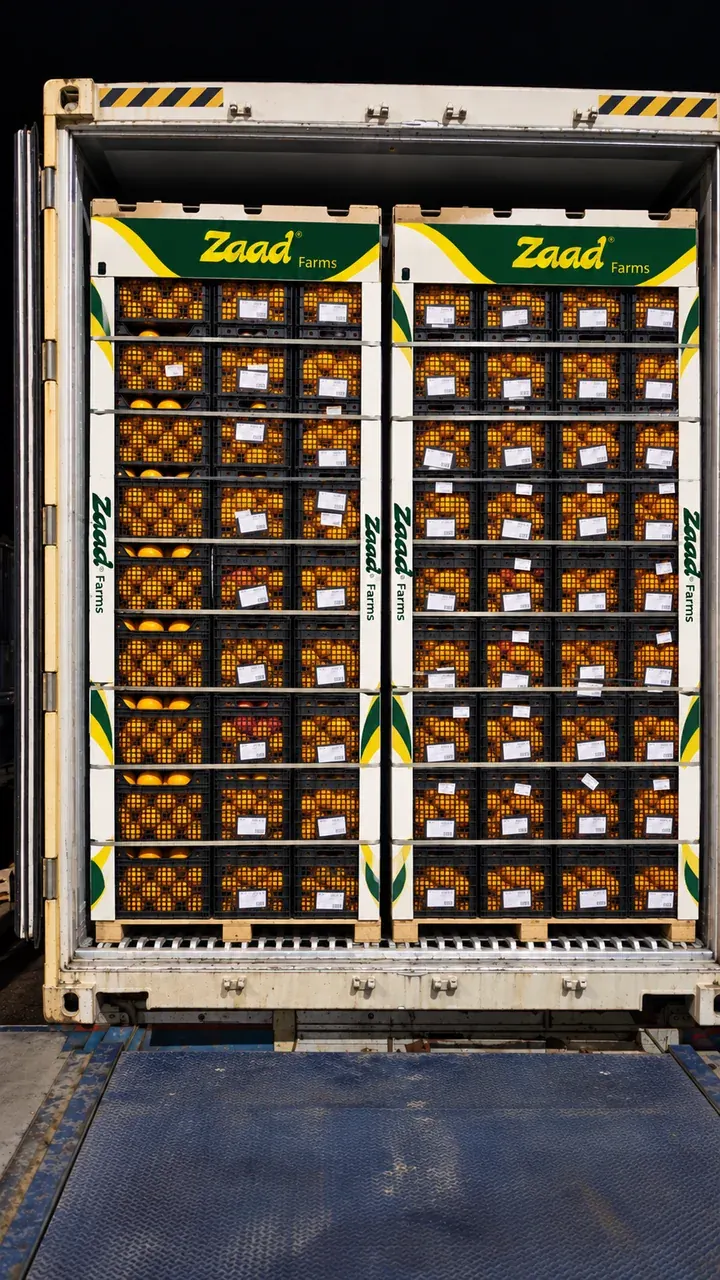
Quick answer: to import Egyptian fresh fruit and vegetables into Great Britain you generally need a phytosanitary certificate from Egypt's plant health authority where the product requires one, pre-notification of the consignment through the UK's import system, produce that meets UK marketing standards and maximum residue limits, and a correct customs declaration with a UK EORI number. Since Brexit the UK runs its own rules, which are similar to but no longer identical with the EU's, and Northern Ireland follows EU rules under the Windsor Framework. This is general information, not legal advice. Rules and checks change, so confirm the current position with your customs broker or the relevant UK authority.
Why the UK is a separate system
Before Brexit, a pallet of oranges entering a UK port was covered by the same EU rules as one entering Rotterdam. Today Great Britain applies its own plant health, food safety and customs regimes. In practice the headings are familiar: plant health certification, quality standards, residue limits and customs entry. But the forms, systems, border points and sometimes the rules themselves are British. An importer who already ships to the EU should not assume that EU paperwork will be accepted as it is. Equally, if you supply both markets, much of the underlying work, such as farm food safety and residue control, is shared. Our guide to EU import requirements covers the EU side.
Plant health: certificates and risk categories
Great Britain classifies imported plants and plant products by risk. Higher-risk products need a phytosanitary certificate issued by the exporting country's plant protection organisation, which for Egypt is the Agricultural Quarantine authority, and are subject to inspection at the border. Lower-risk products may not need a certificate but can still be checked. The classification of each fruit or vegetable, and its origin, can change as UK authorities update their lists, so ask your supplier and broker to confirm the category of your product before the first order. Where a certificate is required it must be issued before shipment and match the consignment. Our guide to export documents and residue rules explains how Egyptian certificates are obtained.
Pre-notification and border checks
Imports of regulated plant products must normally be notified in advance to the UK authorities through an online import notification system, usually completed by the importer or their agent. The notification includes the commodity, origin, quantity, consignee and expected arrival. Based on risk, the consignment is then cleared on documents alone or selected for identity and physical checks at a border control post. Where checks apply, the produce must be accessible and the documents ready. Late or incorrect notification is a common cause of avoidable delay, so agree early who submits it and when.
Marketing standards and quality
Great Britain has retained marketing standards for many fresh fruit and vegetables that mirror the earlier EU rules, covering minimum quality, classes, size and labelling. Retail customers often apply their own, stricter, specifications on top, covering colour, size range, defects and shelf life. For the importer, the practical task is the same as for the EU: agree a written specification, confirm it matches the relevant standard and the buyer's requirements, and verify it by inspection before shipment. See our guide to pre-shipment inspection and, for supermarket programmes, our article on supplier onboarding.
Residues and food safety
Great Britain sets its own maximum residue levels for pesticides, administered separately from the EU's, although in many cases the values are aligned. A substance approved in one system may not be approved, or may have a different limit, in the other. The sensible approach is to hold a spray programme and laboratory analysis that satisfy both the UK and EU limits for your target crops. Retailers also expect recognised food safety certification and traceability, typically GlobalG.A.P. at farm level. See our guides to residue testing and GlobalG.A.P..
Customs, duty and the trade agreement
Every commercial import needs a customs declaration, normally made by a customs broker, and the importer needs a UK EORI number, which begins with the letters GB. Import VAT is accounted for on entry. Egypt has a trade agreement with the UK that can give preferential duty treatment for certain agricultural products, subject to conditions such as proof of origin and, for some products, quotas or seasonal windows. Because tariff lines and conditions differ by product, ask your broker to check the current tariff and whether a certificate of origin is worth supplying rather than assuming a rate.
| Step | What happens | Typical owner |
|---|---|---|
| Product category check | Confirm whether a phytosanitary certificate and inspection apply | Importer and broker |
| Phytosanitary certificate | Issued in Egypt before shipment | Exporter |
| Pre-notification | Online notice of the consignment before arrival | Importer or agent |
| Customs declaration | Entry, duty and VAT using the EORI number | Customs broker |
| Border checks | Documentary, identity or physical checks if selected | UK authorities with importer present |
| Release to market | Goods cleared for delivery | Importer and haulier |
Northern Ireland is different
Northern Ireland continues to apply EU rules for plant health and many other goods rules under the Windsor Framework, which can change how produce moving there is treated. If your buyer is in Northern Ireland, or the shipment will be moved on there, confirm the route and requirements in advance rather than assuming Great Britain rules apply.
A short preparation checklist
- Ask your broker for the current plant health category of each product and whether a certificate and inspection apply.
- Obtain a GB EORI number and appoint a customs broker before the first shipment.
- Agree who submits the pre-notification and the deadline before arrival.
- Check that spray programmes and laboratory results meet UK residue limits as well as EU ones.
- Prepare a written product specification that matches the retailer's requirements.
- Confirm port of entry, free days at destination and delivery arrangements, as in our guide to receiving produce at destination.
Treat the UK as its own market. Paperwork that clears in Rotterdam is not automatically ready for Felixstowe.
Supplying the UK with Zaad Farms
Tell us the product, the port and any retailer standards, and we will confirm the documents and testing we can supply. For fruit that suits the UK retail season, see our strawberries, oranges, grapes and sweet potatoes, and our seasonal calendar for the best months.
Frequently asked questions
Do I need a phytosanitary certificate to import Egyptian produce into Great Britain?
For products classed as higher risk, yes, and it must be issued in Egypt before shipment. Lower-risk products may not need one but can still be checked. Confirm the category of your product with your broker.
What is pre-notification?
An advance notice of the consignment submitted through the UK's online import system, normally by the importer or agent, so border authorities can plan checks.
Are UK and EU residue limits the same?
Great Britain sets its own maximum residue levels, which are often aligned with the EU's but not always. Plan your spray programme and testing to meet both.
Does Egypt have preferential duty access to the UK?
A trade agreement can give preferential treatment for some agricultural products, subject to conditions such as proof of origin, quotas or seasonal windows. Ask your broker to check the current tariff.
Do I need a UK EORI number?
Yes. Importers need a GB EORI number to submit customs declarations. Your customs broker can help you register.
Are the rules the same for Northern Ireland?
No. Northern Ireland follows EU rules for many goods under the Windsor Framework, so confirm the route and requirements in advance.