
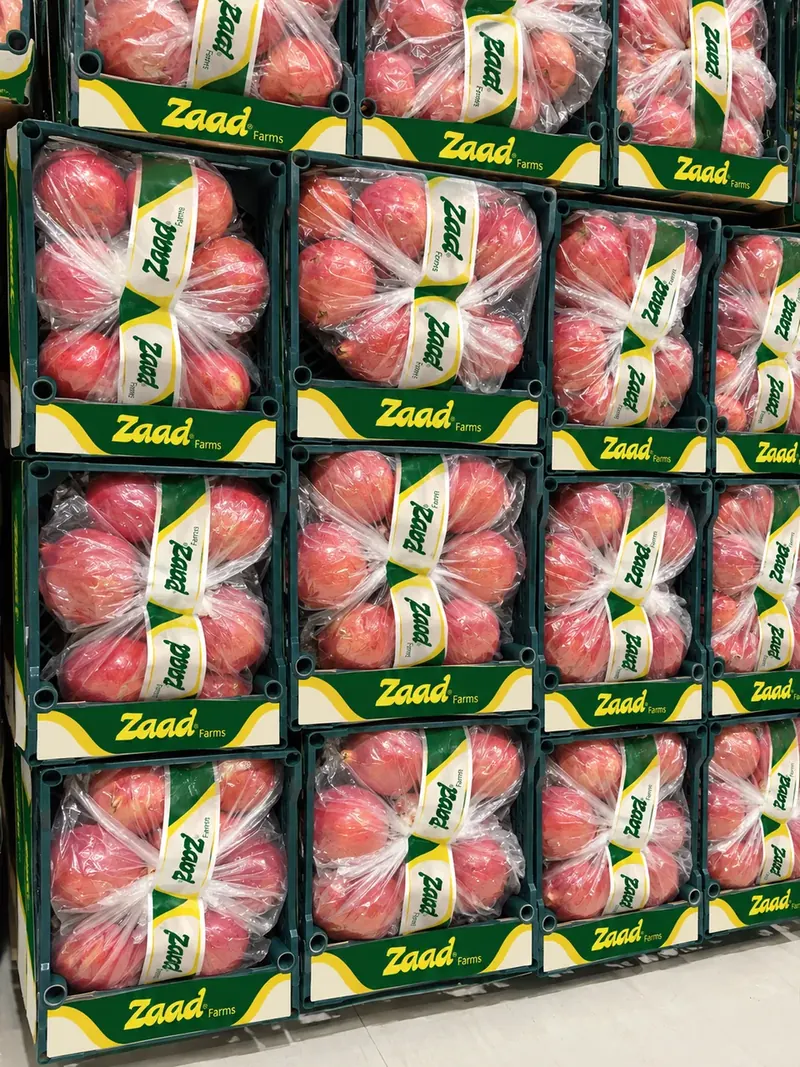
Pomegranates are an autumn product in Egypt, exported from September to December with a peak in October and November. They are popular in the Gulf, Europe and Russia for fresh retail and, increasingly, for arils and juice.
Varieties
- Wonderful — the best-known international variety: deep red skin, dark red arils and a sweet-tart taste. Preferred by many retailers.
- Manfaluti — a traditional Egyptian variety, named after Manfalut in Upper Egypt, with large fruit.
- Baladi — local type with a sweeter taste, popular in regional markets.
- Early 116 — an early variety that opens the season.
Varieties differ in skin colour, aril colour, sweetness and seed hardness. Tell us your market’s preference, and we will match the variety and timing.
Sizes
Pomegranates are sized by the number of fruits in a 4.5 kg carton, typically 6 to 14 per carton. Fewer fruits means bigger pomegranates. Large fruit (counts 6–9) is in demand for premium retail and gifting; medium sizes suit mainstream retail.
Why skin quality matters
A pomegranate is judged first by its skin. Sunburn, cracks, scars and bruises reduce value even when the arils are perfect. Cracked fruit also lets decay in. Specify:
- Skin colour (percentage of red surface).
- Tolerance for sunburn and scars.
- Zero tolerance for open cracks.
- Crown condition.
- Internal quality: aril colour, Brix and acidity if relevant.
Packing formats
- 4.5 kg single-layer carton — fruit in one layer protects the skin; the standard retail format.
- 4.5 kg lined plastic crate — for wholesale and regional distribution.
- Retail bags of a few fruits in master cartons, on request.
Cold chain: stop the water loss
Pomegranates lose water through the skin, which becomes hard and brown. They are also sensitive to chilling injury if carried too cold for too long. A typical set-point is +5 to +7 °C at 90–95% relative humidity. Liners help reduce weight loss on long voyages. Fast cooling after harvest and a stable temperature are the best protection against both dehydration and decay.
Combining with other autumn products
Pomegranates overlap with guavas, the end of the mango season, the start of citrus and sweet potatoes. For importers in the Gulf, a mixed programme of these products from one supplier can simplify the autumn.
For pomegranates, the price is decided by the skin. Protect it in the orchard, in the pack and in the container.
See current specifications on our Egyptian pomegranates page.
Frequently asked questions
When is the Egyptian pomegranate season?
From September to December, with a peak in October and November.
Which pomegranate varieties do you export?
Wonderful, Manfaluti, Baladi and Early 116, depending on the season and the market.
What is the standard pomegranate carton?
A 4.5 kg single-layer carton with 6–14 fruits, depending on size.
At what temperature are pomegranates shipped?
Typically +5 to +7 °C at 90–95% relative humidity.