
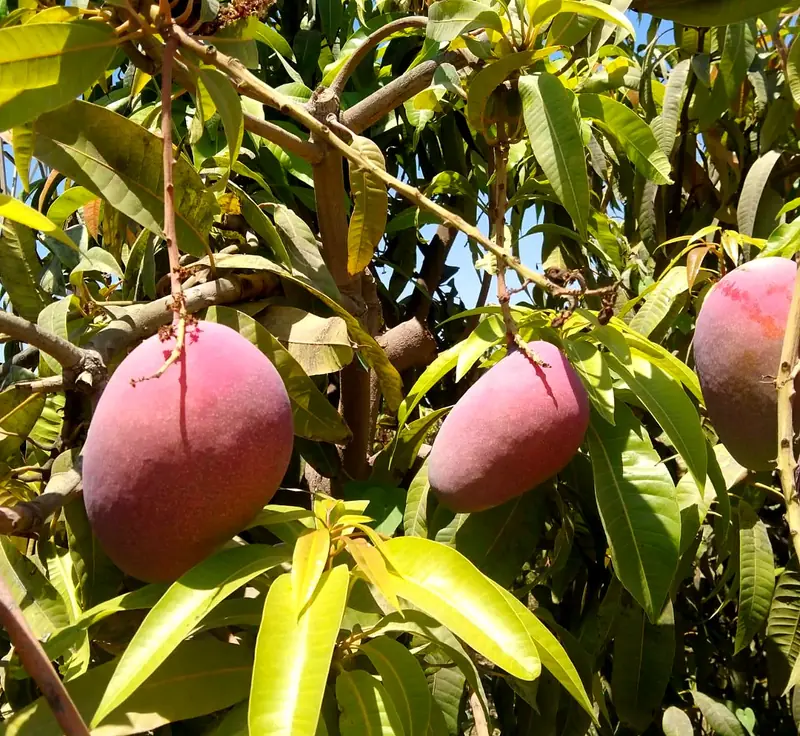
Egypt’s mango season runs from July to November, with a peak in August and September. Egyptian consumers love their local varieties, and the export trade increasingly adds international types such as Keitt and Kent that travel well.
Varieties
- Keitt — a large, late variety with green to slightly blushed skin, firm flesh and little fibre. It travels well and is a strong export type.
- Kent — sweet, juicy, with a red blush and low fibre; popular in European retail.
- Local Egyptian varieties — such as Ewais, Zebda and Sediek, known for their aroma and sweetness and appreciated in Gulf and ethnic markets.
Availability of each variety changes over the season, so varieties are confirmed per order.
Size and grade
Export mangoes typically start from about 350 g per fruit. The count per carton is confirmed per variety and carton size. Grade is Class I or buyer specification, covering skin blemishes, latex burn, shape and firmness.
Maturity: the most important decision
Mangoes are harvested mature but not ripe. How mature depends on the journey:
- Short route or air freight — fruit can be harvested more mature for better flavour on arrival.
- Long sea voyage — fruit is harvested firmer, then ripened at destination.
Maturity is judged by dry matter, flesh colour and firmness. We match harvest maturity to your transit time and ripening plan. If you run ripening rooms, share your protocol.
Packing formats
- 5 kg single-layer export carton, packed by count, with fruit in protective foam nets.
- 2.5 kg carton for premium fruit and air shipments.
- Custom formats and private label by agreement.
Cold chain
Mangoes are chilling-sensitive. Below about +10 °C they can suffer skin damage and poor ripening. The typical set-point is +10 to +13 °C at 85–90% relative humidity. Mangoes release ethylene as they ripen, so they should not share a container with ethylene-sensitive products.
Fresh and frozen mango
Outside the fresh season, mango is available as IQF frozen mango — chunks, dice, slices or cheeks — for smoothie bars, foodservice and industry.
A good mango programme is planned backwards: from the ripeness you want on the shelf to the maturity you need at harvest.
Specifications and availability are on our Egyptian mangoes page.
Frequently asked questions
When is the Egyptian mango season?
From July to November, with a peak in August and September.
Which mango varieties are exported from Egypt?
Keitt and Kent, plus local Egyptian varieties, confirmed per order.
What temperature do mangoes need?
Typically +10 to +13 °C; lower temperatures risk chilling injury.
Can I get mango outside the season?
Yes, as IQF frozen mango: chunks, dice, slices or cheeks.